
Food Street Brings Rare Pakistani Street Food Experience to Secaucus
Updated: Jun 11

When I look for Pakistani restaurants, I usually come up short. There are so few options for South Asian cuisine in North Jersey that you usually have to settle for Indian or cross state lines to Jackson Heights to get a proper Pakistani dish. Which establishment could I recommend to friends that wasn’t remotely Indian or Mediterranean? Owners Ishrat Ilyas and Qamar Abbas have answered the long-awaited question, giving Pakistanis a second place to call home with Food Street.

In the heart of Secaucus’ multicultural center, Food Street sits on the corner of Front Street as a staple for Pakistani Muslims searching for a halal food spot and a distinct taste of the food carts our parents once stopped at after school. The aromatic waves of spices dance in the air, mingling to provide my nose and drooling mouth with a path to one of the most authentic Pakistani street food restaurants around.

Walking through the door, you’re welcomed with an array of bright colors and murals layered on the walls. From a giant faux-metal shutter cover painted with former Prime Minister and cricketer Imran Khan to the enormous, flavorful creation of their guppa chaat, they are on a mission to put Pakistan on the map.
Khan is not just a recognizable face in Pakistan; he is part of the country’s modern cultural and political identity, rising from cricket legend to prime minister before his forcible removal from office in 2022. For diners, his portrait on the wall adds another layer of Pakistani pride and nostalgia.
Fatima Eldei, 20, walks out Food Street after dining with a friend. Photo by Desi Defined. A couple sit down to enjoy their gol guppa.
Trade the formal tablecloths and dimmed lighting for a chill spot where you can grab fresh cane juice, a chicken tikka paratha roll, and scroll on your laptop with friends. The space gives young Muslims a casual place to sit and eat without feeling like they’re stuck being watched by nosy aunties and uncles
Chandeliers hang from white ceilings and murals with scriptural writing, “Qamar Ki Bathiak,” which translates to "Qamar’s Lounge," portraying a comfy and casual South Asian street-side sitting room. Neon signs Tables wrap around the inside of the restaurant's perimeter, creating a view of everyday life in Secaucus.
One bite and a peek out the window reveal small multi-cultural communities scattered within eye's distance. Across the street, four old Italian men sit on checker-printed lawn chairs, enjoying the sunset while they decide what they want for dinner, a teen biker zipping through the streets of town, and parents crossing the street after karate classes.
Being one of the few Pakistani restaurants around, it has become a TikTok hot spot for food reviews.
A skewer of chicken tikka cubes standing up straight in a cylinder tandoor. Photo by Desi Defined. One of the cooks uses a chef's knife to slice the chicken over the tandoor. Photo by Desi Defined.
Beyond the kitchen doors, heat builds from a grey metal cylinder where one of the chefs pulls a metal spear from a cloud of smoke lined with cubes of chicken marked with char from high-heat flames. He grabs a chef’s knife, swiftly slices through each piece of protein and, then returns the spear to the orange-heated hue of the tandoor.

A sizzle signals a paratha has hit the stovetop, building a crispy outer layer for the tikka masala paratha
roll. Swiping the paratha to the assembly board, the chef effortlessly slides the column of chicken to it’s bed of sliced red onions, spicy green sauce and tops it with a folded omelette, all wrapped up into a roll. From one bite, you feel the warmth from the spice build in your taste buds to the tangy sweetness of the tamarind sauce cooling down each bite.

Dating back to 2600 B.C., archaeologists can only assume the first clay ovens were being used at the same time as the building of smooth-sided pyramids in Egypt. After fighting for their independence from British India in 1947, Punjabi Pakistanis who sought a better life in India introduced clay ovens to Delhi residents, making it a staple in their cuisine. From there, Armenians, Iranians, Pakistanis, Indians, and Uzbeks have utilized the ancient clay-shaped vase for succulent kebabs on long metal skewers, seared tomatoes, and fluffy flat breads pressed against the 900-degree Fahrenheit walls.
Sourcing their cuisine from Lahore, the heart of Pakistan’s food center, they serve up the tastiest paratha rolls, Pakistani American fusion burgers, and firni to sweeten your palate after some spice. They even have meatless classics such as an aalu tikka burger and paneer tikka roll, all at an affordable price range of $10-$20. Finish up your meal with a classic cup of karak chai, a milky blend of green cardamom, ginger, cloves, and black tea.

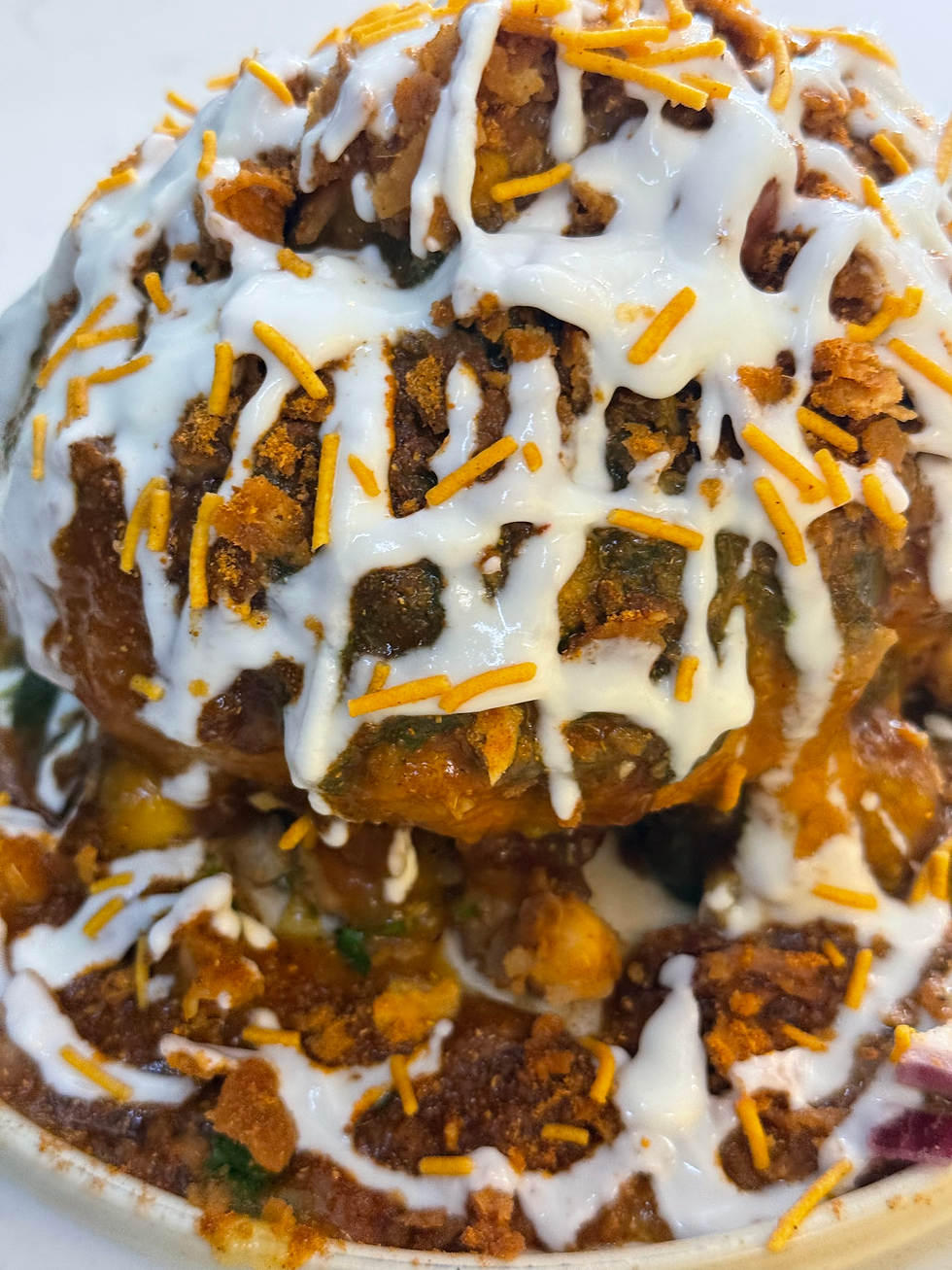
Their main star is the guppa chaat, a classic on the streets of Pakistan, which is made fresh to order at their chaat station. Dressed in a mixture of softened cubed potatoes and chickpeas, thinly sliced green chili peppers, crunchy red onions, refreshing bites of tomatoes, the crunch from each piece of daal sev, and a splash of tamarind and green chili chutney with a sprinkle of chaat masala and pomegranate seeds dusted over the soccer ball-sized creation. The combination packs a sweet and sour burst of flavors for your mouth to salivate over.
Food Street brings the feeling of Pakistani street food into a casual New Jersey space, giving young Muslims a place to eat, hang out and experience those flavors without the stiffness of a traditional sit-down restaurant.



Comments